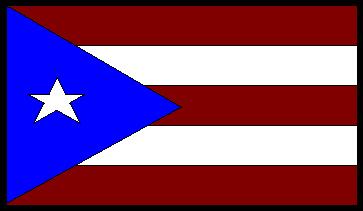
 My parents, Jean and Abraham Zwickel, devoted their lives for nearly six
decades to the independence of Puerto Rico from U.S. Colonial Rule.
An important first step had been to oust the U.S. Navy from “la Isla Nena”,
the island of Vieques, which has endured despoliation for over forty years.
My mother's merciless lobbying of the international peace community to
pay attention to the issue resulted in an international delegation in the
late nineties to study the effects of militarization on Puerto Rico and
Vieques and Puerto Rico.
My parents, Jean and Abraham Zwickel, devoted their lives for nearly six
decades to the independence of Puerto Rico from U.S. Colonial Rule.
An important first step had been to oust the U.S. Navy from “la Isla Nena”,
the island of Vieques, which has endured despoliation for over forty years.
My mother's merciless lobbying of the international peace community to
pay attention to the issue resulted in an international delegation in the
late nineties to study the effects of militarization on Puerto Rico and
Vieques and Puerto Rico.
On April 30, 2003, after
a four-year nonviolent uprising by the people of the island,
the Navy vacated the Vieques bombing range, an area covering a third of
the island. ¡Viva Vieques Libre!
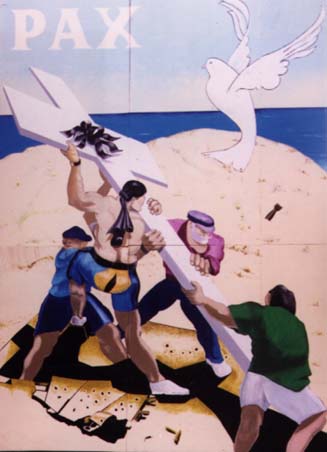
¡Viva Vieques Libre!

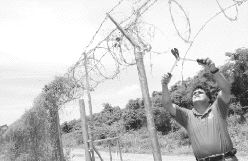
Residents who once threw themselves in the line of fire as Vieques waged a campaign to oust the Navy will be feted as guests of honor. The Navy handed over 15,000 acres on the eastern end of Vieques to the U.S. Department of the Interior, the military said in a statement. After an extensive cleanup, the property will become a wildlife refuge. "We are here today to mark the beginning of a new era in peace and prosperity for Vieques," Gov. Sila Calderon said to thunderous applause. "It is a moment of great joy, for we have achieved our dream." Pulling large wire cutters out of their knapsacks, activists rushed to help U.S. Fish and Wildlife Service workers dismantle a chain-link fence. But activists say the U.S. agency risks being perceived as another intruder. "These lands are ours," said Ismael Guadalupe, who protested for years to oust the Navy from Vieques. "We don't recognize the right of the Fish and Wildlife Service to administer the land." Me+anwhile, seven miles away by boat on the main island of Puerto Rico, the sprawling Navy base that once served as headquarters for Vieques training is shrinking dramatically. Nearly half of Naval Station Roosevelt Roads' employees are shipping out, leaving one of the island's largest employers ready for closure. The Navy announced this month that it is laying off or reposting nearly half its 6,300 employees at Roosevelt Roads. An elite Special Operations command will return stateside. The 400-person naval hospital will close, and an aerial counterdrug operation will fly away. And the Atlantic Fleet training facility will move to sites in northern Florida and North Carolina. Also, a day after the hand-over, an important U.S. Army command in charge of Latin America operations, U.S. Army South, will begin to leave its base near San Juan for Fort Sam Houston in San Antonio. In the 1940s, the United States bought 25,000 acres -- about two-thirds of the island -- to create the bombing range. The families and farmers had to leave. With the range closing, many hoped that the land would be turned over to local authorities for development projects that would stimulate tourism and create jobs. The unemployment rate on Vieques is about 12 percent. Tensions between the Navy and residents have been high since 1999, when
two errant 500-pound bombs killed a civilian guard. Protesters stormed
the range and occupied it for a year before federal marshals forced them
out. The exercises resumed, but only with dummy bombs.
|
For our Fair Use of Copyrighted material Notice, please click on the ©.

|

